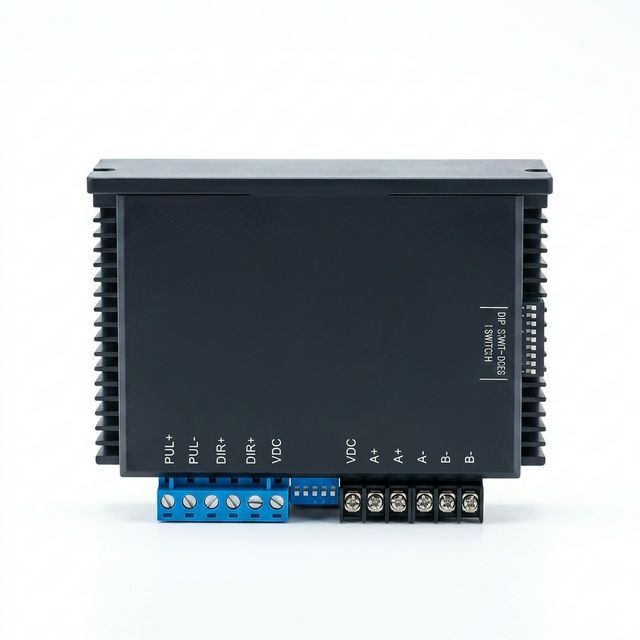
High Power Stepper Motor Sizing Tool and 12V Decision Report
This guide covers both high power stepper motor and the 12 v high power stepper motors scenario. Use the tool first to check electrical feasibility, then use the report layers to decide what to buy, what to test, and where risk sits.
Tool Layer: 12V High Power Fit Checker
Enter your planned motor and drive settings. This calculator uses a deterministic RL + pulse-budget screening model and returns a clear fit/watch/limit result with a minimum executable action.
Result Layer: Interpretation + Action
Results are grouped by summary, electrical model and thermal impact. Use the mode toggle to reveal details progressively without losing the top-line decision.
Validation Gap Review and Closure
This enhancement round focuses on information gain, evidence quality, and decision safety. Gaps are tracked explicitly so unresolved items stay visible as pending, not hidden by generic wording.
| Gap | Why It Mattered | Applied Update | Status |
|---|---|---|---|
| Core conclusions lacked explicit source linkage. | Users could read conclusions but needed extra effort to verify evidence lineage for each claim. | Added evidence IDs to conclusions and added a dedicated conclusion-to-evidence traceability table. | Closed |
| 12V counterexamples were implied, not structured. | Without structured counterexamples, teams could over-generalize one successful bench case. | Added a scenario-grade counterexample matrix for 12V viability, driver minimum voltage, and pull-out torque boundaries. | Closed |
| High-impact electrical risks were under-specified. | Bus spikes and deceleration back-EMF can damage hardware even when average current appears acceptable. | Added explicit LC-spike and deceleration back-EMF risk controls with source-backed mitigation actions. | Closed |
| Universal RPM and enclosure thermal outcomes remained uncertain. | No reliable public dataset covers all NEMA 23 variants, inertias, and enclosure geometries. | Kept this as an explicit uncertainty and marked as pending confirmation to prevent fabricated one-number claims. | Open (pending confirmation) |
| Decision Question | Where It Can Work | Where It Fails | Minimum Action | Evidence |
|---|---|---|---|---|
| Can 12V be accepted if the prototype turns correctly at no load? | May pass in low-speed and low-inertia demonstrations where pulse demand and headroom remain conservative. | Fails when the axis approaches pull-out torque or transient acceleration demand exceeds available current-rise margin. | Run loaded acceleration tests and ensure the operating point does not cross pull-out torque boundary. | E5 |
| Can 12V be used with any “high power” driver class? | Works only with drivers whose operating range explicitly includes 12V. | Fails immediately for drivers with minimum input above 12V (for example, DM542E starts at 18V). | Check driver min/max bus before BOM freeze; reject non-compatible voltage classes early. | E3 |
| If average current looks safe, is bus-voltage stress solved? | Average current checks are useful for thermal planning under stable wiring and short leads. | Long leads and low-ESR bus capacitors can create LC spikes beyond driver limits, even on a nominal 12V system. | Add local bulk capacitance per driver guidance and verify VMOT transients on hardware. | E6 |
| Does 1/16 or 1/32 microstep guarantee equivalent accuracy gain? | Improves smoothness and commanded resolution in many motion profiles. | Absolute positioning under load can still deviate due to motor/load nonlinearity and torque margin limits. | Validate absolute positioning error under real load/inertia instead of assuming microstep ratio equals accuracy ratio. | E8 |
Report Summary: Core Conclusions and Key Numbers
These conclusion cards are decision-facing. Each one links to the evidence and method layers below so the rationale is auditable.
Methodology and Evidence Layer
Method formulas are explicit and reproducible. Sources prioritize first-party datasheets/manuals and official technical notes. Items without reliable public data remain explicitly marked as pending confirmation.
| Metric | Formula | Decision Use |
|---|---|---|
| Required winding voltage for target current | V_req = I_effective × R_phase | If supply voltage is near V_req, current rise margin is limited and high-speed torque usually collapses early. |
| RL time constant | tau = L / R | Higher tau means slower current rise. For high power motion targets, lower tau or higher bus voltage is usually needed. |
| Pulse demand | f_pulse = (200 × microstep × RPM) / 60 | Compares tool demand to controller/driver pulse capability. 200kHz is used as a DM542E-class reference, not a universal ceiling. |
| Copper loss at standstill | P_cu ~= 2 × I_effective² × R_phase | Useful for thermal risk screening; real machine heating also depends on airflow, mounting and duty cycle. |
| Inductance-based voltage heuristic (vendor empirical) | V_bus,max ~= 32 × sqrt(L_mH), then clamp by driver absolute max | Used as a fast screening upper bound from Geckodrive guidance. This is a vendor heuristic, not a universal standard. |
| 12V bus current estimate | I_supply_12 ~= P_cu / (12 × eta), eta=0.85 | Helps estimate whether a 12V supply is practical for the requested current target. |
Unknown or unavailable vendor values are treated as unknown and never auto-filled with guessed numbers.
| Conclusion | Evidence IDs | Remaining Uncertainty |
|---|---|---|
| 12V is usually not enough for high-power speed targets | E3, E5, E11, E12 | Machine-specific inertia/load can still move boundary outcomes; bench validation remains required. |
| Current-limit alignment is a hard safety gate | E1, E2, E7 | No blocker in public evidence; still validate with the selected motor-driver pair. |
| Pulse-chain and pull-out torque boundaries must be checked together | E3, E5 | No blocker in public evidence; still validate with the selected motor-driver pair. |
| Thermal estimate changes purchasing decisions early | E10 | No blocker in public evidence; still validate with the selected motor-driver pair. |
| Microstepping smoothness does not equal absolute accuracy | E8 | No blocker in public evidence; still validate with the selected motor-driver pair. |
| ID | Source | Extracted Fact | Date | Link |
|---|---|---|---|---|
| E1 | TI DRV8825 datasheet (Rev. F) | VM operating range is 8.2V to 45V; integrated microstepping indexer supports up to 1/32-step operation. | Rev. F, Jul 2014; accessed 2026-04-13 | Open |
| E2 | Allegro A4988 datasheet | A4988 supports 8-35V motor supply, ±2A output (thermal-limited), and full to 1/16 microstep resolutions. | Datasheet revision listed by vendor; accessed 2026-04-13 | Open |
| E3 | Leadshine DM542E user manual | DM542E specifies 18-50VDC input (24-48V recommended), peak current up to 4.2A, and pulse input up to 200kHz. | Manual version on vendor site; accessed 2026-04-13 | Open |
| E4 | Leadshine DM542E power-supply guidance | Manual states power-supply selection must include line fluctuation and motor back-EMF during deceleration. | Manual version on vendor site; accessed 2026-04-13 | Open |
| E5 | Oriental Motor speed-torque curves note | Speed-torque curves are valid only for a specific motor/driver/voltage test condition, and crossing pull-out torque causes synchronism loss. | Technology page on official site; accessed 2026-04-13 | Open |
| E6 | Pololu A4988 carrier documentation | Low-ESR VMOT ceramics with long leads can generate LC spikes that exceed 35V and damage the driver, even with a 12V source. | Product technical note; accessed 2026-04-13 | Open |
| E7 | Pololu A4988 current-limit note | In chopper drives, supply current is not equal to coil current; current limiting must be set and verified at the phase path. | Product technical note; accessed 2026-04-13 | Open |
| E8 | Analog Devices Analog Dialogue (microstepping) | Microstepping increases commanded resolution and smoothness but does not linearly improve absolute positioning accuracy under load. | Article published 2025-02; accessed 2026-04-13 | Open |
| E9 | Geckodrive G540 manual Rev 8 | Provides an empirical supply-voltage sizing rule Vmax ~= 32 x sqrt(inductance in mH), with drive voltage limit capped at 50V. | Rev 8 manual on vendor site; accessed 2026-04-13 | Open |
| E10 | Oriental Motor service-life guidance | Notes most stepper case-temperature limits near 100°C and states grease life roughly halves for each +15°C temperature rise. | Support article on official site; accessed 2026-04-13 | Open |
| E11 | AMETEK MAE ST23 datasheet | NEMA 23 winding examples span wide resistance/inductance/current ranges, requiring selection by electrical model not frame size alone. | Datasheet on official site; accessed 2026-04-13 | Open |
| E12 | AutomationDirect STP-MTRH-23079 / STP-MTRAC-23078D pages | NEMA 23 examples show 286 oz-in @ 5.6A and 227 oz-in @ 0.71A, illustrating large current/torque variance under same frame. | Catalog pages on vendor site; accessed 2026-04-13 | Open |
Applicable and Non-Applicable Boundaries
This table is the operational gate between prototype and production. Every state has a minimum executable path.
| Boundary | Trigger | Implication | Minimum Executable Next Step |
|---|---|---|---|
| Fit | Voltage headroom >= 3.0, pulse utilization <= 70%, current limit not over nameplate, and estimated copper loss <= 28W at <=40°C ambient. | 12V may still work for low-to-mid speed, but 24V/48V remains safer for acceleration margin. | Proceed to bench validation with stall margin and temperature logging. |
| Watch | Voltage headroom 2.0-3.0, pulse utilization 70-95%, underdrive >10%, or thermal estimate 28-38W. | System can run, but torque fade, step loss, or heat rise risk grows under transient loads. | Reduce RPM/microstep, increase bus voltage, or improve cooling before release. |
| Limit | Voltage headroom < 2.0, pulse utilization >95%, selected driver minimum bus > current bus, driver current over nameplate, or thermal estimate >38W. | Configuration is not suitable for reliable high-power operation and may enter missed-step or over-voltage failure modes. | Use a compatible driver-voltage class, reselect winding if needed, and rerun acceptance with deceleration over-voltage checks. |
Comparison Layer and Risk Controls
Compare practical driver-voltage classes and map each path to concrete risks and mitigations.
| Option | Voltage Class | Current Band | Best Fit | Primary Risk |
|---|---|---|---|---|
| 12V + low-voltage carrier (A4988/DRV8825 class) | 8-35V or 8.2-45V (driver-limited) | 1-2.2A practical with cooling | Light loads, moderate speed, compact systems | High-current NEMA 23 setups quickly hit thermal/current headroom limits; long bus leads increase LC-spike risk. |
| 24V + DM542E class drive | 18-50V (24-48V recommended) | 1.0-4.2A | General CNC/automation with better mid-speed torque retention | If microstep and RPM are too high, pulse-chain bottlenecks still appear. |
| 48V + DM542E/industrial drive class | Within driver range, closer to recommended high side | 2-4A NEMA 23 class | Higher speed with better current rise and torque margin | Wiring, EMC, and deceleration back-EMF management become stricter as bus energy increases. |
| AC-input high-bus stepper package | Rectified high DC bus in package | Depends on matched motor/drive set | When high-speed torque retention is a hard requirement | Integration complexity and cost are higher; not all machine envelopes need this. |
| Risk | Probability | Impact | Mitigation |
|---|---|---|---|
| Treating 12V as universally sufficient | High | High | Use voltage headroom + pulse utilization checks before selecting the final bus voltage. |
| Using supply current as coil current proxy | High | High | Set current limit by driver sense method and verify phase current directly. |
| Overdriving current to chase torque | Medium | High | Keep driver current at or below motor nameplate and use torque-speed tests, not static assumptions. |
| Excessive microstep at high RPM | Medium | Medium | Reduce microstep and preserve pulse budget for speed-demanded axes. |
| Ignoring thermal coupling in enclosure | Medium | High | Add thermal telemetry and enforce derating above 40°C ambient. |
| Deceleration back-EMF pushing bus voltage above safe range | Medium | High | Reserve voltage margin, verify decel profiles, and validate peak bus voltage with oscilloscope before release. |
| Assuming microstepping ratio equals absolute accuracy gain | Medium | Medium | Treat microstepping as smoothness/resolution aid and validate absolute positioning with load-inertia tests. |
| Dimension | Status | Note |
|---|---|---|
| Driver voltage/pulse limits | Known | Covered by datasheets/manuals (E1-E4). This includes driver classes where 12V is out of operating range. |
| Universal max RPM for all NEMA 23 | Pending confirmation | No reliable public dataset provides a single universal RPM limit across winding variants, inertias, and load profiles. This page intentionally avoids one-number claims. |
| Exact enclosure thermal rise | Pending confirmation | Public evidence is insufficient for machine-specific enclosure thermal rise. Requires hardware test or simulation with geometry, airflow, and duty cycle. |
Scenario Demonstrations
Each scenario includes assumptions, process and outcome so teams can replicate the logic and adjust for their own machine context.
| Scenario | Assumptions | Process | Outcome | Boundary |
|---|---|---|---|---|
| Scenario A: 12V Feasibility Baseline | 12V bus, 3.0A winding, 1.1Ω/3.2mH, 300RPM, microstep 16, ambient 30°C. | Tool checks voltage headroom, pulse demand, and current reach against one-step window. | Usually watch/limit. High-power target is constrained by voltage headroom and pulse chain at higher speed. | Watch |
| Scenario B: 24V Mid-Risk Recovery | Same motor/load, bus changed to 24V with matched current limit. | Headroom roughly doubles, current-rise window improves, and pulse budget remains unchanged. | Often fit/watch depending on RPM. This is the common minimum viable upgrade path. | Fit |
| Scenario C: 48V High-Speed Production | 48V bus, same winding, target 600RPM with tuned current and cooling plan. | Headroom and current rise improve, but thermal and wiring safeguards become mandatory. | Fit for speed-driven axes when thermal and EMC validation are completed. | Fit |
Decision FAQ
FAQ is grouped by decision intent: 12V feasibility, electrical model, and deployment risk.