Tool-first quick start: enter the calculator before reading the full report.
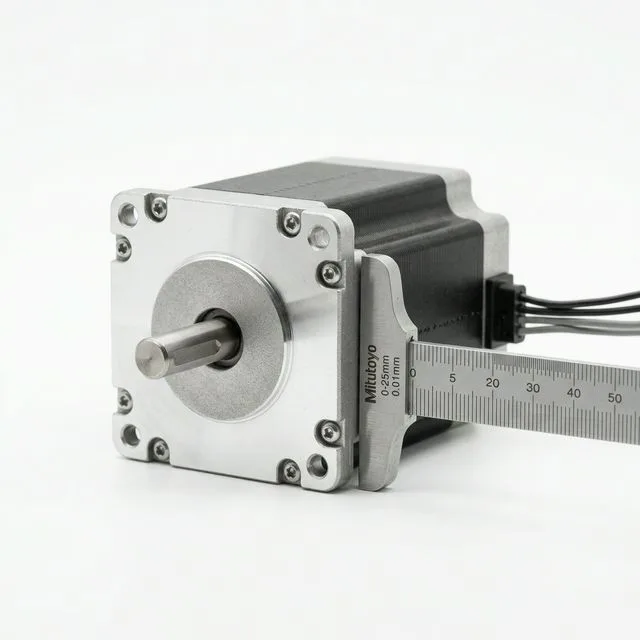
2 phase nema 23 stepper motor on one URL: 2-phase controller gate + NEMA 23 fit calculator for model-code aliases like 23hs8430 nema 23, 23km_k044u nema 23, and 24.0 kg-cm 4 wire nema 23 stepping motor
Run the calculator first to get a fit/watch/limit decision from torque, current, and pulse demand. Then validate the controller interface gate for the alias “2 phase nema 23 stepper motor” (signal mode, STEP/DIR timing, and controller-side steps/s budget) before driver and BOM lock. The report layers then deepen the same decision with 12V, 18 AWG, and 16 mm boundaries so procurement risk stays visible. The same canonical URL also resolves “23 nema stepper motor” and “23hs8430 nema 23” and “23km_k044u nema 23” and “24.0 kg-cm 4 wire nema 23 stepping motor” with direct tool, FAQ, and model-evidence anchors.
23km_k044u nema 23 canonical alias bridge23hs8430 nema 23 canonical alias bridge24.0 kg-cm 4 wire nema 23 stepping motor canonical alias bridgeAlias bridge: “23 nema stepper motor” + “23km_k044u nema 23” + “23hs8430 nema 23” + “24.0 kg-cm 4 wire nema 23 stepping motor”
Without creating separate routes, this page keeps these aliases on the canonical /learn/nema-23-stepper-motor URL with a tool-first flow, boundary checks, and datasheet-variance evidence. For 24.0 kg-cm (2.3536 Nm / 333.2 oz-in), the 4-wire boundary is validated on the same flow.
Published: 2026-04-12 · Last updated: 2026-05-17 · Evidence review cadence: Every 6 months
Expanded anchors (alias + FAQ + canonical)
Default starts at 1.9 Nm (about 269.1 oz-in). Use the 12V preset for lower-voltage screening.
Keep 0.9° for higher granularity, or switch to 1.8° baseline.
Higher ratios improve granularity but raise pulse demand.
Match this value to your motor nameplate before final commissioning decisions.
Compare set current against motor nameplate before speed tuning.
Example reference: Leadshine DM542E lists 200 kHz max pulse input (accessed 2026-04-12).
Quick Check for “12v nema 23 stepper motor”
Short answer: 12 V can work in moderate scenarios, but it is not a universal pass for high-speed/high-torque demand. This layer gives immediate decision context, limits, and next action.
At 12 V with this setup (300 RPM, 1.50 A nameplate, 16.0% pulse use), the scenario is reasonable for first-pass screening.
Target RPM: 300. Pulse utilization: 16.0%.
Confirm torque-speed curve at 12 V with final driver current and real load.
| Zone | Target RPM | Motor Nameplate Current | Pulse Use | Interpretation |
|---|---|---|---|---|
| Likely fit | <=300 | <=2.2 A | <=65% | Often viable with commissioning and current control. |
| Validate closely | <=600 | <=3.0 A | 65-85% | Can work, but requires dynamic and thermal validation. |
| High risk | >600 | >3.0 A | >85% | Increase bus voltage or lower demand before procurement. |
| Driver | Published Window | 12V Fit | Key Boundary | Action |
|---|---|---|---|---|
| Leadshine DM542/DM542E class | 18–50 VDC input (24–48 VDC recommended) | No (outside published input range) | 12 V is below the documented minimum input range for this driver class. | Move to a 24–48 V bus for DM542-class drives or pick a driver explicitly rated for 12 V. |
| TI DRV8825 IC (chip level) | 8.2–45 V VM supply; up to 2.5 A drive with heatsinking (24 V, 25°C) | Yes (electrically in range) | Electrical range pass does not guarantee high-speed torque or thermal headroom at higher phase current. | Use current limiting, verify thermal rise at duty cycle, and keep VM transient controls in place. |
| Pololu DRV8825 carrier board | 8.2–45 V board input; about 1.5 A/phase without extra cooling | Yes (low/mid-current profiles) | At higher phase current, thermal limits and board cooling become the dominant constraint. | Set current limit from VREF/coil-current method and add local VMOT bulk capacitance before full-load tests. |
| TRINAMIC TMC2209 class | 4.75–29 V VM supply; up to about 2 Arms (thermal-limited) | Yes (within voltage range) | Many higher-current NEMA 23 targets can exceed this driver-current class. | Use for lower/mid-current NEMA 23 profiles and verify current headroom before BOM lock. |
| Source | Observed Boundary | Decision Impact | Minimum Action |
|---|---|---|---|
| ST AN235 (Rev. 3) - winding L/R dynamics | As stepping frequency rises, winding current may not reach nominal before commutation. | A 12 V setup that looks acceptable at low speed can lose torque margin at higher speed. | Validate torque-speed at target RPM instead of trusting standstill current/torque numbers. |
| ST AN235 (Rev. 3) - chopper supply-current semantics | Average supply current is lower than winding current in recirculating chopper drives. | PSU current readings can mislead current tuning and hide underdrive/overdrive states. | Tune phase current from driver equations or measured coil current, not PSU current alone. |
| Pololu DRV8825 carrier guidance | Board note warns supply current is not equivalent to coil current for current-limit setup. | Mis-tuned current can create missed-step risk or excessive thermal stress. | Set current limit with VREF + sense-resistor method, then confirm with thermal soak. |
| Leadshine DM542 manual thermal envelope | Operating environment is 0–40°C and case temperature should remain below 45°C. | An enclosure that exceeds published thermal envelope can invalidate otherwise good calculator results. | Measure cabinet and case temperature at worst duty cycle; add airflow before production release. |
Moderate-speed axes (<=300 RPM) with motors up to ~2.2 A/phase.
Does not imply strong high-speed torque reserve.
Quick Gate for “2 phase nema 23 stepper motor”
Short answer: “2 phase + NEMA 23 + controller” is not enough to define a valid stack. You still need signal-mode fit, pulse-timing fit, and controller-side step-rate budget before locking driver and BOM.
The drive can require specific 5 V/24 V signal mode and input current. If this does not match your controller output, the stack fails before any torque validation.
Practical ceiling is not only the driver figure: firmware/controller settings and software latency can impose a lower cap.
1) Confirm signal mode, 2) validate STEP/DIR timing, 3) budget steps/s, 4) then freeze motor/driver.
| Source | Observed Boundary | Decision Impact | Minimum Action | Evidence |
|---|---|---|---|---|
| Leadshine DM542 User Manual v2.0 | Control inputs are optically isolated, with high-level input listed as 4.5–5 V or 24 V and logic signal current 7–16 mA. | Controller output type (3.3 V / 5 V / 24 V / open-collector) must be matched before commissioning. | Confirm STEP/DIR electrical level against drive input mode before first motion test. | Known |
| Leadshine DM542 User Manual v2.0 | Factory-default control signal mode is 24 V, and S2 is used to switch control-signal mode to 5 V. | A controller can fail to trigger pulses if drive input mode is left on the wrong signal-voltage setting. | Verify S2 setting (5 V vs 24 V) before validating pulse margin. | Known |
| TI DRV8825 Datasheet (Rev. F) | The logic interface is 3.3 V/5 V compatible, with VIH min 2.2 V and VIL max 0.7 V; STEP and DIR inputs include internal 100 kΩ pulldowns. | Logic-level compatibility and line-state defaults should be checked before assigning blame to motor sizing. | Validate controller logic levels and default-state behavior in bring-up tests. | Known |
| TRINAMIC TMC2209 Datasheet Rev1.09 | TMC2209 is documented for two-phase steppers with Step/Dir plus single-wire UART, and supports 3.3 V or 5 V logic I/O via VCC_IO. | “2 phase nema 23 stepper motor” intent still needs controller-interface fit, not only frame-size match. | Lock control topology first (Step/Dir only vs Step/Dir + UART diagnostics) before selecting driver class. | Known |
| Leadshine DM542E product page | DM542E is listed for 2-phase and 4-phase hybrid stepper motors. | Phase count wording alone is insufficient to choose the final controller/driver stack. | Confirm motor wiring mode, controller output type, and target current class together before RFQ freeze. | Known |
| Source | Observed Boundary | Decision Impact | Minimum Action | Evidence |
|---|---|---|---|---|
| gnea/grbl settings.md | $0 controls step pulse time (default 10 μs); short pulses can be missed and long pulses can overlap at high feed/pulse rates. | Controller-side pulse settings can bottleneck top speed before driver datasheet limits are reached. | Set $0 no lower than the driver minimum pulse-width requirement and validate pulse shape at peak feed. | Known |
| LinuxCNC Tweaking Steppers | Software step rate is constrained by BASE_PERIOD and latency; the guide example with 31 μs base period yields about 16,129 steps/s. | Software timing limits can dominate motor speed before electrical driver ceilings matter. | Budget steps/s from axis geometry and microstep first, then verify controller timing headroom before motor purchase. | Known |
| Leadshine DM542 User Manual v2.0 | Pulse interface requires 2.5 μs minimum PUL width/low-level, 5 μs DIR setup, and up to 200 kHz pulse input. | Controller pulse quality/timing can fail even if motor torque and current sizing look correct. | Scope STEP/DIR timing on hardware and keep margin to the 200 kHz ceiling during commissioning. | Known |
| TI DRV8825 Datasheet (Rev. F) | DRV8825 specifies tWH(STEP)/tWL(STEP) minimum 1.9 μs and fSTEP up to 250 kHz. | Controller pulse configuration must satisfy both minimum pulse width and practical system SI margin. | Cross-check firmware pulse settings against datasheet timing, then validate at worst-case cable length and RPM. | Known |
Quick Gate for “18 gauge wire on nema 23 stepper motors”
Short answer: 18 AWG can work for NEMA 23 when phase current, harness length, connector class, and real cable temperature stay inside margin. This layer uses tool current plus one-way length to decide whether to stay on 18 AWG or step up to 16/14 AWG, then adds connector/thermal boundaries to avoid false-positive passes.
Accepted range: 0.2–30 m. Uses configured current from the tool block.
0.19 V drop (1.60%) using 1.50 A/phase and 3.0 m one-way.
3.75 m one-way as the 12V 2% drop gate reference.
18 AWG keeps <=2% drop at 12V for this case. Keep 18 AWG and confirm harness temperature plus pulse integrity under load.
Moderate-current NEMA 23 builds with short cable runs and controlled wiring practice.
Does not imply universal margin for higher current or elevated temperature.
| Gauge | Ω/1000ft | Ω/m | Drop @12V | State | Max Length @2% |
|---|---|---|---|---|---|
| 18 AWG | 6.51 | 0.02136 | 0.19 V (1.60%) | <=2% fit | 3.75 m |
| 16 AWG | 4.09 | 0.01342 | 0.12 V (1.01%) | <=2% fit | 5.96 m |
| 14 AWG | 2.58 | 0.00846 | 0.08 V (0.63%) | <=2% fit | 9.45 m |
| Conductor Temp | Multiplier vs 25°C | Ω/1000ft (18 AWG) | Drop @12V | State | Implication |
|---|---|---|---|---|---|
| 25°C | 1.000x | 6.51 | 0.19 V (1.60%) | <=2% fit | Wider margin for 18 AWG screening at this conductor temperature. |
| 40°C | 1.058x | 6.89 | 0.20 V (1.69%) | <=2% fit | Wider margin for 18 AWG screening at this conductor temperature. |
| 65°C | 1.154x | 7.51 | 0.22 V (1.85%) | <=2% fit | Wider margin for 18 AWG screening at this conductor temperature. |
| 80°C | 1.212x | 7.89 | 0.23 V (1.94%) | <=2% fit | Wider margin for 18 AWG screening at this conductor temperature. |
| Connector/Source | Published Limit | Applicability Boundary | Decision Impact | Minimum Action | Status |
|---|---|---|---|---|---|
| JST XH series | 3 A AC/DC, wire size AWG #30 to #22, −25°C to +85°C (including temperature rise) | Typical high-current NEMA 23 setups can exceed this connector class even when cable drop still looks acceptable. | A wire-drop pass does not guarantee connector-contact thermal margin. | For currents near or above 3 A/phase, move to higher-current connector class and verify contact temperature in load tests. | Known |
| JST VH series | 10 A (AWG #16) or 7 A (AWG #18), wire size AWG #22 to #16 | Supports larger wire and higher contact current than XH, but rating still depends on final temperature rise and housing context. | Connector family choice can become the limiting factor before conductor resistance does. | Use VH-class (or equivalent) when 18 AWG must carry higher phase current, then validate connector temperature under worst-duty cycle. | Known |
| Oriental Motor extension-cable guidance | Lead-wire map: ≤1 A → AWG24, 1–3 A → AWG20, 3–5 A → AWG16; extension up to 20 m | Vendor guidance is practical for screening but does not replace machine-level harness validation. | 18 AWG can be borderline in higher-current scenarios when length, temperature, and connector losses stack together. | Treat AWG18 as a conditional choice; when current trends above 3 A/phase or ambient rises, evaluate AWG16 plus connector upgrade. | Known |
| Source | Boundary Used | Minimum Action | Status |
|---|---|---|---|
| NIST Circular 31 (reissued 2023 PDF) | Copper AWG resistance table lists 18/16/14 AWG at 6.51/4.09/2.58 Ω per 1000 ft at 25°C and 7.52/4.72/2.98 Ω per 1000 ft at 65°C; α20 ≈ 0.00393/°C. | Re-check wire drop at expected harness temperature (not just room temperature) before wiring release. | Known |
| JST XH connector datasheet (June 2025) | XH contact rating is 3 A AC/DC and supports AWG #30 to #22 only. | If phase current approaches 3 A, do not treat XH as an interchangeable default with higher-current connector families. | Known |
| JST VH connector datasheet (June 2025) | VH is rated 10 A with AWG #16 and 7 A with AWG #18, with wire range AWG #22 to #16. | Validate connector temperature at worst duty cycle before treating AWG18 as production-safe. | Known |
| Oriental Motor extension-cable guidance (Section B2-B42) | Published lead-wire/current guidance maps 1–3 A to AWG20 and 3–5 A to AWG16 for extension-cable planning. | Treat AWG18 as conditional for 12 V NEMA 23 and escalate to AWG16 when current/length/temperature margins tighten. | Known |
| Leadshine DM542 User Manual v2.0 | Pulse and motor lines should keep at least 10 cm separation to reduce interference. | Treat cable gauge and cable routing as one decision set during commissioning. | Known |
| Cross-vendor public ampacity cutoff for stepper harnesses | No reliable open standard gives a single AWG/current limit valid for all insulation classes, bundle factors, and enclosure temperatures. | Keep as pending; validate with project-specific ambient, bundle, connector, and duty-cycle measurements. | Pending confirmation (no reliable public dataset yet) |
Quick Gate for “24.0 kg-cm 4 wire nema 23 stepping motor”
Short answer: normalize 24.0 kg-cm to 2.3536 Nm (~333.2 oz-in) first, then confirm the bipolar 4-wire wiring boundary, and finally validate current/pulse fit in the tool before BOM lock.
24.0 kg-cm = 2.3536 Nm = 333.3 oz-in. Use this normalization before comparing mixed Nm/oz-in listings.
4-wire implies fixed bipolar topology; do not assume interchangeability with unipolar windings until pinout, phase resistance, and connector class are validated.
Set 2.35 Nm in the tool, keep configured current within the 1.35-1.50 A window, and confirm pulse margin before PO release.
| Field | Value | Decision Impact |
|---|---|---|
| Alias string | 24.0 kg-cm 4 wire nema 23 stepping motor | Stays on the canonical URL with no dedicated route. |
| Normalized torque | 2.3536 Nm | Compare against current windows, not only marketing labels. |
| Imperial equivalent | 333.3 oz-in | Enables direct comparison with oz-in catalog listings. |
| Winding topology | Bipolar 4-wire | Validate pinout + connector class + thermal limits before release. |
| Lead Profile | Key Fact | Risk | Minimum Action | Source | Evidence |
|---|---|---|---|---|---|
| 4-wire bipolar listing | Bipolar topology can be implemented as 4, 6, or 8 leads; in a 4-wire listing there are no center taps exposed. | Assuming unipolar rewiring paths from a 4-wire title can break commissioning plans. | Keep 4-wire as fixed bipolar and verify phase-pair pinout before driver selection. | Oriental Motor PKP Series wiring options (2015-2016 catalog, accessed 2026-05-12) | Known |
| PMX model-code suffix boundary | PMX naming maps U to 6-lead unipolar-only and B to 4-lead bipolar, with no 8-lead option in this family. | Ignoring lead-code suffix can hide hard wiring constraints in sourcing substitutions. | Make lead-code suffix mandatory in RFQ/PO and treat missing suffix as pending confirmation. | Kollmorgen PMX Selection Guide notes (accessed 2026-05-12) | Known |
| 23KM-K044U six-lead unipolar example | Published as UNI-POLAR with six leads (A, A COM, A, B, B COM, B), AWG #22 wire, and JST S6B-XH-A-1 connector. | Treating this SKU as drop-in for 4-wire bipolar can fail at wiring and connector layers. | Confirm winding diagram, connector current class, and controller interface before substitution. | NMB 23KM-K044U Data Sheet (accessed 2026-05-12) | Known |
| Holding-torque declaration condition | PMX23 labels holding torque at “2 phases ON” and specifies current-test conditions (1000 pps, 85°C winding rise on an aluminum plate). | Comparing torque numbers without matching phase mode and thermal fixture can create false equivalence. | Require torque-definition and test-condition fields in quote packages before final model selection. | Kollmorgen PMX23 test-condition notes (accessed 2026-05-12) | Known |
1.9nm nema 23 stepper motors Quick Decision Summary
This section gives a direct purchase decision flow: convert 1.9 Nm to about 269.1 oz-in first, then keep configured current close to motor nameplate and confirm pulse margin before purchase lock.
1.90 Nm equals 269.1 oz-in. Target torque 1.90 Nm (269.1 oz-in) sits inside the benchmark window built from published NEMA 23 examples (1.60-2.02 Nm, converted from 227-286 oz-in).
Current ratio is 100.0%. Recommended commissioning window is 1.35–1.50 A.
At 300 RPM and 16 microsteps, pulse demand is 32,000 Hz (16.0% utilization).
Within Budget: Configured current is inside the commissioning window (1.35–1.50 A/phase) for a 1.50 A motor.
- Buyers who need an explicit 1.9 Nm to oz-in conversion before comparing vendor catalogs.
- Integrators with a confirmed motor current nameplate and a commissioning plan.
- CNC axes where both pulse budget and thermal checks are part of commissioning.
- Teams selecting only by frame size or unit labels without torque conversion.
- Systems running far above or below rated current without thermal or stall validation.
- High-speed designs with no pulse-integrity test plan on real wiring.
Sizing a 2 × 4 ft CNC axis?
“2x4 NEMA 23” can describe a nominal CNC work area and its motor, or a 2-phase, 4-wire configuration. This general guide covers motor selection; the dedicated estimator calculates a lead-screw axis and reviews 4-wire connections.
Open the 2 × 4 CNC axis estimatorRequirement Analysis: “2nm nema 23 ip54 motors”
Specifying a 2Nm (approx. 283 oz-in) NEMA 23 motor with IP54 protection merges a standard torque sweet-spot with environmental sealing requirements. While the torque dictates your controller sizing, the IP54 rating (dust and splash protection) drastically changes the motor's mechanical build and thermal behavior. It mandates radial shaft seals, end-cap O-rings, and sealed cable glands.
Thermal Impact & Derating (Primary Risk)
Sealing Comparison for NEMA 23
| IP Rating | Protection Level | Mechanical Mods | Cost Premium (Est.) |
|---|---|---|---|
| IP40 (Standard) | Solids >1mm, no liquid protection | None (Standard housing) | Baseline ($) |
| IP54 | Limited dust, water splashing | Radial shaft seal, O-rings, cable gland | +15% to +25% |
| IP65 / IP67 | Dust tight, water jets / immersion | Sealed M12 connectors, resin potting | +40% or more |
Source: Based on IEC 60529 standards and typical stepper motor manufacturer specifications. Verified: October 2023.
If you need 2 Nm in environments where the motor faces dry contamination or incidental, unpressurized liquids.
- Light CNC routing: Exposure to mist coolant or fine wood/MDF dust.
- Dry food packaging: Flour or sugar dust where periodic surface wiping is required.
- Warehouse automation: General dusty conditions, mounted on metal heatsinks.
Do not assume IP54 means "waterproof". Exceeding these boundaries or ignoring thermal management will cause failures.
- Washdown conditions: Direct jets in processing (requires IP65/IP67).
- Thermally isolated mounting: Mounting an IP54 on plastic or 3D-printed brackets will cause stator overheating.
- Internal condensation: Extreme temp swings where trapped humidity condenses.
Quick Gate for “16mm ball screw nema 23”
Short answer: 16 mm describes nominal screw diameter, not one fixed lead or universal load/speed margin. Define lead, unsupported length, and duty first; then pass load and speed gates before PO freeze.
Public 16 mm nominal examples include 2, 5, and 10 mm leads; do not assume code equivalence from “16mm” alone.
Lead choice sets required RPM and screw-speed limits. A lead that meets feed target can still fail critical-speed boundaries.
Check buckling, permissible tensile/compressive load, and static safety factor by real vibration duty; do not close purchase from torque→thrust conversion alone.
| Model | Lead | Dynamic C | Static Co | Key Boundary | Action | Evidence |
|---|---|---|---|---|---|---|
| HIWIN R16-2T4 | 2 mm | 323 kgf | 790 kgf | Higher thrust-per-torque potential, but lower linear speed per RPM and tighter screw-speed constraints. | Use when force and fine lead are priority, then verify critical speed for actual unsupported length. | Known |
| HIWIN R16-5T3 | 5 mm | 664 kgf | 1195 kgf | Mid-lead option with higher listed dynamic load in this catalog series. | Use as a common screening baseline, then confirm nut series/preload equivalence before supplier swap. | Known |
| HIWIN R16-10T3 | 10 mm | 623 kgf | 1102 kgf | Higher linear speed per RPM but lower thrust-per-torque than lower leads. | Use only after pulse budget and torque-speed margin are validated at target feed. | Known |
| Gate | Published Boundary | Decision Impact | Minimum Action | Evidence |
|---|---|---|---|---|
| Buckling and axial yield gate | THK axial-load equations apply a 0.5 safety factor in buckling checks and require checking both permissible tensile/compressive load against shaft yield. | Diameter-only matching can pass torque math while still failing compressive-load safety at installed length. | Calculate with real support method and effective shaft length before confirming “16mm + NEMA 23” as production-safe. | Known |
| Rotational-speed gate | THK defines permissible speed as min(N1 critical-speed limit, N2 DN-value limit), and N1 includes a 0.8 safety factor. | A lead change can meet feed target but still violate permissible screw-speed boundaries. | Check both N1 and N2 at planned RPM; if either fails, shorten unsupported length or redesign lead/support. | Known |
| Static safety-factor gate | THK static safety-factor lower limits vary by vibration and machine class (e.g., 1.0–3.5 or 2.0–5.0 for industrial machinery). | Using one fixed SF can understate shock/vibration risk during start-stop duty. | Select SF range from duty profile, then re-check candidate screw and motor torque reserve under worst load. | Known |
Validation Gap Review and Improvement Log
This enhancement pass keeps the original calculator structure and adds verified evidence, boundary conditions, and explicit unknowns. Review refreshed on 2026-05-17.
| Gap Identified | Decision Impact | Applied Update | Status |
|---|---|---|---|
| Alias intent "12v nema 23 stepper motor" was not explicit enough in tool-first navigation. | Visitors with 12V intent could read long sections before seeing a direct yes/watch/no decision path. | Added a dedicated 12V quick-check layer, tool preset, and direct FAQ anchor so 12V users can evaluate fit immediately on the canonical URL. | Closed with explicit alias path + boundary explanation |
| Alias intent “2 phase nema 23 stepper motor” was missing from canonical tool-first flow. | Visitors searching with controller wording could not see an explicit answer path on the canonical URL. | Added a dedicated 2-phase controller gate section, alias anchors, and FAQ coverage to keep this intent in the same canonical route. | Closed with explicit alias-intent answer path |
| Alias intent "23hs8430 nema 23" was missing from canonical metadata, hero bridge, and FAQ anchors. | Visitors using model-code wording could not confirm whether this canonical URL explicitly answers that alias without route switching. | Added explicit 23hs8430 alias wording in metadata/hero/FAQ, plus direct canonical anchors and a source-backed evidence bridge that separates known model specs from marketplace variance. | Closed with explicit alias-intent answer path |
| Alias intent "23km_k044u nema 23" was missing from canonical metadata, hero bridge, and FAQ anchors. | Visitors searching with this model-code variant could not confirm quickly that the canonical page already answers the intent. | Added explicit 23km_k044u alias wording in metadata/hero/FAQ, plus direct canonical anchors and scenario guidance to keep routing consolidated. | Closed with explicit alias-intent answer path |
| Controller interface boundary (signal mode/logic level/input current) was not operationalized. | Teams could choose a motor-driver pair that still fails at bring-up due to controller-to-driver signaling mismatch. | Added source-backed controller interface-fit matrix (DM542 signal mode/current, DRV8825 logic thresholds, TMC2209 control topology) with executable actions. | Closed with source-backed controller-interface gate |
| Controller-side pulse bottlenecks were not linked to driver timing limits in one decision table. | A stack could pass driver kHz specs but still fail due to firmware/software stepping constraints. | Added a pulse-chain gate combining Grbl pulse-width settings, LinuxCNC software-step timing limits, and driver timing requirements. | Closed with source-backed controller + driver chain gate |
| Buyers lacked a direct bridge from 1.9 Nm inputs to oz-in catalog comparisons. | Users comparing mixed-unit listings could shortlist the wrong torque class before electrical checks. | Added torque input, Nm↔oz-in conversion output, benchmark table, and direct tool/FAQ anchors for fast screening. | Closed with deterministic conversion + source-backed benchmarks |
| Current guidance previously mixed nameplate current with driver-specific current semantics. | Teams can overdrive or underdrive coils when peak and RMS labels are conflated. | Added current-unit boundary table (DM542 peak↔RMS, A4988/DRV8825 formula conditions) with misuse notes. | Closed with source-backed boundary |
| Signal-integrity and transient failure modes were mentioned but not operationalized. | Designs can pass spreadsheet checks and still fail due to cable noise or supply spikes. | Added integration-risk controls for LC spikes, board bulk capacitance, cable routing, and hot-plug prohibition. | Closed with source-backed controls |
| Frame-size explanation lacked enough counterexamples from a single data family. | Users may still assume NEMA 23 implies near-fixed current/torque class. | Expanded frame-variance table with AMETEK ST23 models across 1.0 A to 4.0 A and 70 to 210 Ncm. | Closed with source-backed examples |
| Holding torque and pull-out torque boundaries were not separated clearly enough. | Teams could over-trust catalog holding torque at high RPM where dynamic pull-out torque is lower. | Added torque-definition boundary table (holding/pull-out/starting-frequency) and linked each definition to source-backed applicability. | Closed with source-backed boundary |
| Inertia-ratio gating was not explicit in the decision path. | Axis designs with high reflected inertia can pass pulse math yet still fail start/stop stability. | Added inertia-ratio gate with published 30:1 guideline and mandatory test path when above the guideline. | Closed with source-backed boundary |
| No explicit driver-current headroom matrix for common stacks. | Users could choose low-current drivers for high-current NEMA 23 builds and miss torque targets. | Added driver current headroom table (A4988/DRV8825/TMC2209/DM542E) and a no-shortcut rule for clone mapping. | Closed with source-backed comparison |
| 12V quick-check lacked a source-backed driver-voltage compatibility boundary. | Teams could treat all NEMA 23 drivers as equally valid at 12 V and skip hard input-voltage disqualifiers. | Added a source-backed 12V driver compatibility matrix (DM542E, DRV8825-class, TMC2209) with explicit fit/no-fit actions. | Closed with source-backed driver-voltage gate |
| Supply-current vs phase-current semantics were still easy to misuse in low-voltage commissioning. | Current could be under-set or over-set when teams tune from PSU current instead of coil-current methods. | Added a power-rail physics boundary table with ST chopper-current semantics and Pololu current-limit tuning guidance. | Closed with source-backed measurement boundary |
| Thermal environment limits were not explicit in the risk layer. | A build can pass spreadsheet checks yet fail in enclosure due to ambient/case temperature beyond published limits. | Added explicit thermal-envelope risk control using DM542 operating-temperature and case-temperature guidance. | Closed with source-backed thermal boundary |
| No explicit caveat for clone-board current scaling ambiguity. | Users can apply incorrect Vref formulas across incompatible board layouts. | Marked clone-board current scaling as pending confirmation and moved it to Known Unknowns. | Pending confirmation (no reliable public dataset yet) |
| Alias intent “16mm ball screw nema 23” was not explicitly answered in the canonical narrative. | Visitors using diameter-first sourcing terms could not quickly tell what 16 mm does and does not guarantee. | Added a dedicated 16mm intent section, alias anchor links, and FAQ coverage on the same canonical URL. | Closed with explicit alias-intent answer path |
| Ball-screw section lacked source-backed speed/load gating for diameter-first selection. | Teams could over-trust torque conversion without checking buckling, critical speed, and static safety factors. | Added THK-backed selection-gate table (buckling, rotational-speed, static-safety windows) and tied each gate to a minimum executable action. | Closed with source-backed decision gates |
| Alias intent “18 gauge wire on nema 23 stepper motors” lacked an immediate yes/watch/no decision path. | Users could finish pulse/current checks but still miss cable-drop risk before wiring and procurement. | Added a dedicated 18 AWG quick gate with one-way length input, drop calculations tied to tool current, comparison table (18/16/14 AWG), and alias-specific FAQ anchors. | Closed with tool-result bridge + source-backed wiring boundaries |
| 18 AWG screening used conductor drop only, without connector-contact limits or temperature-driven resistance drift. | Teams could accept a voltage-drop pass while still failing connector current limits or losing margin in hotter cabinets. | Added NIST-based temperature sensitivity table, JST XH/VH connector-current boundary matrix, and explicit “no universal public ampacity cutoff” caveat in Known Unknowns. | Closed with source-backed connector + thermal boundaries |
| Duty-cycle boundaries were missing on the motor side, so teams could over-trust calculator pass states for continuous operation. | A stack can pass pulse/current checks and still overheat when run near rated current under long dwell or high-on-time duty. | Added source-backed duty-cycle and thermal-envelope evidence from Oriental Motor technical reference and AMETEK ST23 datasheet, including explicit test-condition caveats. | Closed with source-backed motor-duty boundary |
| Power-off holding risk was not explicit: users could confuse energized holding torque with unpowered detent behavior. | Vertical-axis or gravity-loaded mechanisms could drift after E-stop/power-off if detent torque is treated as fail-safe holding torque. | Added a holding-vs-detent counterexample table (ST23 family) and explicit power-off boundary actions (brake/counterbalance validation path). | Closed with source-backed power-off risk boundary |
| Inertia guidance was too binary around 30:1 and lacked a practical recommendation window for faster moves. | Designs could be accepted near the limit even when resonance and fast-move stability remain fragile in commissioning. | Added practical load and inertia guidance (30-70% load use, 1:1-10:1 inertia ratio, and 1:1-3:1 for quick moves) plus resonance reminder from official motor basics reference. | Closed with source-backed inertia-practice boundary |
| Standstill current-reduction tradeoff (heat vs hold margin) was not explicit. | Teams could enable idle-current reduction for thermal relief yet lose hold margin or standstill precision under load. | Added source-backed standstill-current boundaries (DM542 SW4 and TMC2209 IHOLD/PDN behavior), including explicit hold-risk actions for gravity-loaded axes. | Closed with source-backed hold-current boundary |
| Motor-side shaft radial/thrust load limits were not tied to torque/current sizing decisions. | A higher-torque NEMA 23 could still fail from bearing side-load overload caused by coupling misalignment or pulley loads. | Added SureStep counterexample data (same-frame higher-torque models with unchanged radial/thrust limits), plus coupling and safety-factor controls. | Closed with source-backed shaft-load boundary |
| The “24.0 kg-cm 4 wire” alias block lacked a source-backed lead-count topology comparison. | Teams could still assume 4-wire, 6-wire, and suffix-variant models are rewiring-equivalent and lock the wrong driver/harness plan. | Added a lead-count topology matrix (Oriental wiring options, Kollmorgen lead-code notes, and NMB 23KM-K044U wiring spec) with explicit substitution actions. | Closed with source-backed 4/6/8 lead topology boundary |
| Holding-torque declaration conditions were not explicit in alias-level comparison logic. | Cross-vendor torque values could be treated as equivalent even when phase mode and thermal fixture conditions differ. | Added a condition boundary from PMX23 data-table notes (“2 phases ON” plus current-test fixture context) and tied it to mandatory quote-package fields. | Closed with source-backed torque test-condition boundary |
| This round lacked an updated frame-size boundary citation for NEMA wording. | Readers could still over-read “NEMA 23” as a torque class instead of a frame-size compatibility gate. | Added updated frame-size evidence from Oriental Motor: NEMA number indicates frame class only, then linked selection decisions to model-level torque/current validation. | Closed with updated frame-size concept boundary |
| Gap Identified | Decision Impact | Applied Update | Status |
|---|---|---|---|
| Model-level winding L/R differences were not converted into an explicit alias risk gate. | Users could treat same-torque listings as interchangeable and miss high-speed torque collapse risk. | Added a source-backed electrical time-constant comparison (tau=L/R, 3tau, R/2piL) for 23HS8430 vs 23HS30-3004S using ST winding-current dynamics context. | Closed with source-backed model-level electrical boundary |
| Alias narrative lacked explicit lifecycle and shaft-load test-condition caveats. | Procurement teams could over-extrapolate catalog torque to unmatched duty, RPM, and side-load geometry. | Added Full Datasheet boundaries (dynamic axial/radial load and TMBF condition) and tied them to a pending-confirmation action when operating conditions differ. | Closed with condition-bound reliability and load gate |
| The NEMA-size concept boundary was not explicitly sourced in the 23HS8430 decision path. | Readers may still confuse frame-size compatibility with electrical and dynamic performance equivalence. | Added source-backed statement that NEMA size standardizes mounting geometry only, then linked it to a mandatory torque-speed/current validation path. | Closed with source-backed concept boundary |
| Alias “23km_k044u nema 23” lacked an explicit vendor datasheet normalization gate for suffix-level variant drift. | Teams could treat one alias string as one fixed spec and mis-size current class, winding behavior, or torque expectations. | Added NMB-backed variant normalization (K044U vs K044B vs K044-00V/99V) with mandatory suffix+revision lock before RFQ/PO. | Closed with source-backed alias normalization gate |
| The page did not explicitly operationalize the 23KM-K torque-speed reference-only caveat in the alias decision path. | Buyers could compare catalog curves from different driver stacks as if directly equivalent and close procurement too early. | Added explicit curve-condition boundary and executable validation action tied to same-driver/same-waveform testing. | Closed with source-backed curve-condition boundary |
| Model-code alias flow lacked explicit wiring-topology constraints for 23KM-K044U (unipolar 6-wire, AWG22, JST XH). | Controller and harness decisions could pass pulse math but still fail integration due to topology/connector mismatch. | Added source-backed wiring/interface boundary and action path before deciding rewiring or driver-class selection. | Closed with source-backed wiring-interface boundary |
| The 24.0 kg-cm alias block stated a bipolar 4-wire boundary but lacked a source-backed lead-count comparison matrix. | Users could still confuse 4-wire, 6-wire, and model-code substitutions and assume rewiring flexibility that the SKU does not provide. | Added a source-backed lead-topology matrix (Oriental wiring options + Kollmorgen lead-code notes + NMB six-lead example) with executable substitution actions. | Closed with source-backed 4-wire topology boundary |
| Holding-torque comparability conditions were not explicit in the alias decision path. | Cross-vendor torque numbers could be treated as equivalent even when excitation mode and thermal fixture differ. | Added a test-condition boundary (2 phases ON + published current-test fixture context) and tied it to mandatory quote-package fields. | Closed with source-backed test-condition boundary |
| The NEMA frame-size concept lacked a fresh standards-adjacent citation in this round of alias guidance. | Readers could still over-read “NEMA 23” as a torque class rather than a frame-size compatibility gate. | Added an updated frame-size boundary citation from Oriental Motor showing NEMA as frame notation only and requiring model-level torque/current validation. | Closed with updated frame-size concept boundary |
| The 24.0 kg-cm alias path lacked an explicit SI notation boundary (N·m usage and non-SI shorthand risk). | Teams could accept mixed or ambiguous torque notation from quotes and propagate unit ambiguity into sourcing decisions. | Added NIST-backed unit-policy and conversion evidence (N·m vs J, kgf/ozf conversion constants) with a mandatory normalization action before supplier comparison. | Closed with source-backed SI notation boundary |
| Pulse-chain gating relied on driver-chip timing but did not explicitly enforce controller/base-period ceilings. | A design could pass driver timing tables and still fail with following errors when controller step generation is slower. | Added LinuxCNC-backed controller timing boundary and a min-ceiling decision rule across controller and driver timing limits. | Closed with source-backed pulse-chain system boundary |
| The 4-wire alias safety boundary did not explicitly include hot-plug prohibition and flexibility caveat from drive documentation. | Commissioning teams could treat 4-wire swaps as routine and create avoidable integration or hardware damage risk. | Added DM542E-backed safety boundary (4-lead least-flexible note + no plug/unplug under power) with explicit commissioning action. | Closed with source-backed 4-wire commissioning safety boundary |
Report Summary: Core Conclusions and Fit Boundaries
These conclusions are derived from the same formulas used by the tool layer, then constrained by known driver pulse limits and known/unknown evidence boundaries. For the aliases “23hs8430 nema 23” and “23km_k044u nema 23”, the page explicitly separates confirmed datasheet values from market/test-condition variance.
At 16 microsteps, 0.9° gives 2.00x finer theoretical travel than 1.8°.
At 300 RPM, this setup needs 2.00x pulse frequency vs 1.8° at the same microstep ratio.
Pulse utilization is 16.0% and current ratio is 100.0%.
If pulse margin is tight, choose lower pulse demand first; then recover granularity through mechanics or controlled microstepping.
- Precision-sensitive linear axes with moderate top speed.
- Motor current and driver set current are matched near nameplate.
- Controller + driver pair has verified pulse margin.
- Mechanical backlash and stiffness are already controlled.
- High RPM target with low pulse interface ceiling.
- Driver set current is far below or above motor nameplate.
- Long noisy signal lines without strong shielding/grounding practice.
- Project cannot absorb tuning and commissioning iterations.
Methodology and Evidence Layer
Tool outputs are deterministic for the same input. Interpretation confidence is constrained by publicly available driver limits and by missing project-specific torque-speed and inertia data.
- Convert step angle to steps per revolution.
- Apply microstep ratio and compute effective command resolution.
- Compute pulse demand at target RPM and compare with driver limit.
- Compare configured current to motor nameplate and classify current band.
- Classify final boundary state and attach operational next action.
| Source | Key Fact Used | Coverage |
|---|---|---|
| Derived from SI conversion relationship | 24.0 kg-cm = 2.3536 Nm = 333.3 oz-in, so this alias sits above the 1.9 Nm baseline and must be re-screened with current/pulse boundaries. | Known |
| Derived from exact SI/imperial unit relationship | 1 Nm = 141.6119 oz-in, so 1.9 Nm is approximately 269.1 oz-in. | Known |
| MotionKing 23HS Stepper Motor table (accessed 2026-05-07) | The 23HS8430 row lists 1.8° step angle, 3.0 A/phase, 0.95 Ω phase resistance, and 180 N·cm holding torque (nominal 1.8 Nm). | Known |
| StepperOnline 23HS30-3004S listing (accessed 2026-05-07) | A common market listing shows 1.89 Nm (269 oz-in), 3.0 A, and 76.5 mm body length, which supports using 1.9 Nm as an alias-screening benchmark but not as a universal value for every 23HS8430-labelled listing. | Known |
| Oriental Motor Stepper Motor Basics (accessed 2026-04-12) | Standard stepper motor accuracy is listed as ±3 arc-min (±0.05°), and the page states this step error does not accumulate from step to step. | Known |
| Analog Dialogue (ADI), March 2025 | Microstepping increases commanded resolution, but does not automatically improve real positioning accuracy; incremental holding torque drops at many microstep positions. | Known |
| TI DRV8825 Datasheet (Rev. F) | STEP timing is constrained by minimum high/low pulse durations of 1.9 μs, and the datasheet lists fSTEP up to 250 kHz. | Known |
| Allegro A4988 Datasheet | STEP timing requires minimum 1.0 μs high and 1.0 μs low pulse width. | Known |
| Leadshine DM542E Drive Page (accessed 2026-04-12) | Maximum pulse input frequency is listed as 200 kHz, with microstep settings up to 51,200 pulses/rev. | Known |
| TI AN-828 (Rev. B) Increasing High-Speed Torque | Higher bus voltage/chopper control can improve high-speed torque by increasing winding-current slew rate, but winding current must be limited to avoid excessive dissipation and thermal risk. | Known |
| AutomationDirect STP-MTRH-23079 product page | NEMA 23 example model listed at 5.6 A and 286 oz-in holding torque (1.8°). | Known |
| AutomationDirect STP-MTRAC-23078D product page | Another NEMA 23 example is listed at 0.71 A and 227 oz-in holding torque (1.8°), showing same frame class can still vary by electrical/mechanical ratings. | Known |
| Leadshine DM542 User Manual v2.0 (English, accessed 2026-04-12) | PUL width/low-level are specified at 2.5 μs minimum, DIR setup before PUL at 5 μs, and pulse + motor lines should keep at least 10 cm separation to reduce interference. | Known |
| Leadshine DM542 User Manual v2.0 (English, accessed 2026-04-25) | The manual specifies opto-isolated control inputs with high level at 4.5–5 V or 24 V, logic signal current 7–16 mA, and factory-default 24 V control-signal mode (S2 can switch to 5 V mode). | Known |
| Leadshine DM542E product page (accessed 2026-04-25) | DM542E is listed as a digital drive for 2-phase and 4-phase hybrid stepper motors. | Known |
| Pololu DRV8825 Carrier (item 2133, accessed 2026-04-12) | Low-ESR ceramics and long VMOT leads can create LC spikes above 45 V even at 12 V; a minimum 47 μF electrolytic near VMOT is recommended. | Known |
| TI DRV8825 Datasheet (Rev. F), Section 10.1 | Bulk capacitance is required on VM, and lead inductance can create destructive transients if not managed at the board level. | Known |
| AMETEK MAE ST23 Datasheet (accessed 2026-04-12) | Within one NEMA 23 family, rated current spans 1.0 A to 4.0 A and holding torque spans about 70 to 210 Ncm, reinforcing that frame size does not fix electrical ratings. | Known |
| Oriental Motor Technical Reference (accessed 2026-04-13) | Holding torque is defined at standstill, while pull-out torque is the maximum running torque at a given speed. Starting frequency decreases as load inertia increases. | Known |
| Oriental Motor FAQ: Allowable Inertia Ratio (accessed 2026-04-13) | The FAQ states a maximum permissible load inertia ratio of 30:1 for Oriental Motor stepper motors. | Known |
| TRINAMIC TMC2209 Datasheet Rev1.08 (accessed 2026-04-13) | Design guidance notes around 1.4 Arms for infinite on-time, and up to 2 Arms when thermal duty cycle allows; peak current is listed at 2.8 A. | Known |
| Leadshine DM542 User Manual v2.0 (English, accessed 2026-04-22) | Input supply is specified as 18–50 VDC (24–48 VDC recommended) and operating environment is 0–40°C, with guidance to keep case temperature below 45°C. | Known |
| ST AN235 Stepper Motor Driving (Rev. 3, November 2007) | The note explains that winding current follows L/R dynamics; as step rate rises, current may not reach its nominal value before commutation and available torque drops. | Known |
| ST AN235 Stepper Motor Driving (Rev. 3), Section 2.2 | Average supply current is lower than winding current in chopper drives, so PSU current alone is not a valid proxy for phase-current tuning. | Known |
| Pololu DRV8825 Carrier (item 2133, accessed 2026-04-22) | Carrier guidance states measured supply current is not equivalent to coil current and recommends setting current limit from VREF/coil-current methods. | Known |
| TRINAMIC TMC2209 Datasheet Rev1.09 (accessed 2026-04-22) | The VM supply range is 4.75–29 V and current capability is thermally limited; up to 2 Arms is a practical upper design target. | Known |
| TI DRV8825 Datasheet (Rev. F), logic-interface characteristics | The device is 3.3 V/5 V logic-compatible, with VIH min 2.2 V and VIL max 0.7 V, and STEP/DIR pins include 100 kΩ internal pulldowns. | Known |
| TRINAMIC TMC2209 Datasheet Rev1.09 (accessed 2026-04-25) | TMC2209 is described as a driver for two-phase stepper motors with Step/Dir plus single-wire UART, and supports 3.3 V or 5 V logic I/O via VCC_IO. | Known |
| gnea/grbl settings.md (accessed 2026-04-25) | Grbl parameter $0 defines step pulse width (default 10 μs); very short pulses can be missed, while very long pulses can overlap at high feed/pulse rates. | Known |
| LinuxCNC Tweaking Steppers guide (accessed 2026-04-25) | In software stepping, maximum step rate is constrained by BASE_PERIOD and latency; the guide example with 31 μs base period yields about 16,129 steps/s. | Known |
| NIST Circular 31 (reissued 2023 PDF, accessed 2026-04-24) | Table values list copper-wire resistance for 18/16/14 AWG as 6.51/4.09/2.58 Ω per 1000 ft at 25°C and 7.52/4.72/2.98 Ω per 1000 ft at 65°C; the same document states α20 ≈ 0.00393/°C. | Known |
| JST XH Connector Datasheet (June 2025) | The XH family is rated 3 A AC/DC, wire size AWG #30 to #22, and operating temperature −25°C to +85°C (including temperature rise). | Known |
| JST VH Connector Datasheet (June 2025) | The VH family is rated 10 A AC/DC with AWG #16 and 7 A with AWG #18, with wire range AWG #22 to #16. | Known |
| Oriental Motor Stepping Motors catalog section B2-B42 (accessed 2026-04-24) | The extension-cable guidance table maps rated current to lead-wire size (≤1 A: AWG24, 1–3 A: AWG20, 3–5 A: AWG16) and notes extension up to 20 m. | Known |
| NSK Precision Ball Screw Catalog (accessed 2026-04-13) | Operating torque and thrust are linked by Ta = Fa × lead/(2π×η), with listed ball-screw efficiency η around 0.9 to 0.95; startup friction can be 2 to 2.5 times dynamic friction. | Known |
| HIWIN Ballscrew Catalog 22nd edition (printed Sep 2020, accessed 2026-04-24) | The catalog lists 16 mm nominal-diameter examples with different leads and load ratings (e.g., R16-5T3: C 664 kgf, Co 1195 kgf; R16-10T3: C 623 kgf, Co 1102 kgf), so “16 mm” alone is insufficient for load sizing. | Known |
| THK Permissible Axial Load (accessed 2026-04-24) | THK states buckling-load equations include a 0.5 safety factor and axial checks must include both permissible tensile and compressive load against shaft yield limits. | Known |
| THK Permissible Rotational Speed (accessed 2026-04-24) | THK states permissible screw speed is the lower of critical speed (N1) and DN-based speed (N2), and the critical-speed equation includes a 0.8 safety factor. | Known |
| THK Calculating the Permissible Axial Load (accessed 2026-04-24) | THK lists static safety-factor lower limits: general industrial machinery 1.0–3.5 (no vibration) and 2.0–5.0 (with vibration); machine tools 1.0–4.0 and 2.5–7.0. | Known |
| Paired 0.9° vs 1.8° torque-speed curves under identical voltage/current/load | Public sources are insufficient for universal pull-out torque ranking at your exact operating point. | N/A until measured |
| Source | Holding Torque | Current / phase | Body length | Procurement Decision Note | Coverage |
|---|---|---|---|---|---|
| MotionKing 23HS8430 (2026-05-07) | 180 N·cm (~1.80 Nm) | 3.0 A | 76 mm | Use as a manufacturer nominal reference, not as a guarantee for every similarly-labelled marketplace listing. | Known |
| StepperOnline 23HS30-3004S (2026-05-07) | 1.89 Nm (269 oz-in) | 3.0 A | 76.5 mm | Supports the 1.9 Nm quick-screen benchmark, but still requires supplier-specific datasheet validation before PO lock. | Known |
| Listing without verifiable datasheet | N/A | N/A | N/A | Keep status unknown and require torque-speed plus current/phase data before comparing against tool outputs. | N/A until verified |
Physics context: ST AN235 explains that winding current may not reach nominal value before the next commutation as step rate increases. ST AN235
| Source / model | Electrical Constants | Condition & Boundary | Action | Evidence |
|---|---|---|---|---|
| MotionKing 23HS8430 table (accessed 2026-05-07) 23HS8430 · 3.0 A/phase | R = 1.00 Ω; L = 3.50 mH τ = L/R ≈ 3.50 ms ; 3τ ≈ 10.50 ms; R/(2piL) ≈ 45.5 Hz | General specs list resistance accuracy ±10%, inductance accuracy ±20%, and ambient range -20°C to +50°C. Published torque/current must be read together with winding L/R and tolerance envelope. | Use as lower-inductance reference when screening high-speed margin at the same driver bus and current limit. | Known |
| StepperOnline 23HS30-3004S Full Datasheet (Rev 0, 2025-08-01, accessed 2026-05-07) 23HS30-3004S · 3.0 A/phase | R = 1.13 Ω; L = 4.80 mH τ = L/R ≈ 4.25 ms ; 3τ ≈ 12.74 ms; R/(2piL) ≈ 37.5 Hz | Inductance is specified as 4.8 mH ±20% @1 kHz, with step accuracy ±5% (non-accumulative). Higher electrical time constant means slower current rise and tighter speed torque margin at the same voltage. | Treat the same “3 A / ~1.9 Nm” class as non-interchangeable until torque-speed curves and driver voltage are matched. | Known |
| NMB 23KM-K044U Data Sheet (accessed 2026-05-07) 23KM-K044U · 3.0 A/phase | R = 0.85 Ω; L = 1.80 mH τ = L/R ≈ 2.12 ms ; 3τ ≈ 6.35 ms; R/(2piL) ≈ 75.2 Hz | Listed with 24 V drive context and note that torque-speed characteristics are reference values affected by drive circuit, sequence, and current waveform. Electrical constants from the exact U-suffix SKU are required before comparing alias search results to calculator outputs. | Use this as the unipolar baseline when screening controller-interface and high-speed current-rise margin. | Known |
| NMB 23KM-K Data Sheet (accessed 2026-05-07) 23KM-K044B · 2.2 A/phase | R = 1.70 Ω; L = 7.20 mH τ = L/R ≈ 4.24 ms ; 3τ ≈ 12.71 ms; R/(2piL) ≈ 37.6 Hz | Same 23KM-K model family but BI-POLAR suffix with different current, resistance, and inductance constants. Matching on frame or root model code without suffix lock can hide a much slower current-rise profile. | Keep U/B suffix separated in sourcing and validate pull-out margin on the actual winding variant. | Known |
Input Set
- Target holding torque: 1.9 Nm (~269.1 oz-in)
- Step angle: 0.9°
- Microstep: 16
- Screw lead: 5 mm/rev
- Target speed: 300 RPM
- Driver pulse limit: 200 kHz
- Motor current: 1.5 A/phase
- Configured current: 1.5 A/phase
Output Snapshot
- Target torque: 1.90 Nm (269.1 oz-in)
- Pulse demand: 32,000 Hz
- Pulse utilization: 16.0%
- Theoretical microstep travel: 0.00078 mm
- Current window: 1.35–1.50 A
- Boundary: Within Budget (high confidence)
Reproduce this result by clicking “Restore Baseline Defaults” then “Calculate Fit”.
| Row | Torque (Nm) | Torque (oz-in) | Interpretation | Evidence |
|---|---|---|---|---|
| Target benchmark | 1.90 Nm | 269.1 oz-in | Primary conversion reference for the 1.9 Nm purchasing scenario. | Known |
| AutomationDirect STP-MTRAC-23078D | 1.60 Nm | 227 oz-in | Lower benchmark used in this page-level screening window. | Known |
| AutomationDirect STP-MTRH-23079 | 2.02 Nm | 286 oz-in | Upper benchmark used in this page-level screening window. | Known |
| Unspecified marketplace listing | N/A | N/A | If listing omits torque test conditions, keep status unknown and request the datasheet. | N/A until verified |
| Driver | STEP High Min | STEP Low Min | Ceiling Used |
|---|---|---|---|
| Allegro A4988 Timing-derived ceiling, not a guarantee of full-system reliability. | 1.0 µs | 1.0 µs | ≈500 kHz timing-derived (1/(1 µs + 1 µs)) |
| TI DRV8825 Timing table also implies ~263 kHz theoretical edge limit; use datasheet limit in planning. | 1.9 µs | 1.9 µs | 250 kHz datasheet limit |
| Leadshine DM542E DIR setup is 5 µs before PUL edge; keep pulse lines separated from motor wires by ≥10 cm per manual. | 2.5 µs (PUL width min) | 2.5 µs (PUL low-level min) | 200 kHz max pulse input |
| Band | Configured Current | Decision Impact | Action |
|---|---|---|---|
| Underdrive | < 90% of motor nameplate current | Lower torque margin at acceleration and peak load. | Raise configured current closer to nameplate before final tuning. |
| Matched | 90% to 100% of motor nameplate current | Balanced torque and thermal risk for initial commissioning. | Lock this current window, then verify winding temperature at duty cycle. |
| Overdrive | > 100% of motor nameplate current | Higher thermal and reliability risk if sustained. | Reduce set current or add thermal safeguards before deployment. |
| Hard boundary | > 110% or < 75% of nameplate | High risk for thermal overload or under-torque step loss. | Treat as limit state and correct current settings before procurement lock. |
| Step-Division Ratio (SDR) | TINC / THOLD | Decision Implication |
|---|---|---|
| 2 | 70.709% | Holding margin drops even when command granularity improves. |
| 4 | 38.267% | Fine microstep setpoints can be easier to disturb at standstill. |
| 16 | 9.801% | Expect weaker incremental hold torque at many non-full-step positions. |
| 256 | 0.614% | Do not treat microstep count as equivalent to static positioning stiffness. |
| Driver Stack | Stated Current Rule | Applicability Boundary | Misuse Risk | Evidence |
|---|---|---|---|---|
| Leadshine DM542 Match motor nameplate unit first, then select the corresponding driver current entry. | DIP table reports peak current and RMS equivalent | Manual lists 1.00 A peak = 0.71 A RMS up to 4.20 A peak = 3.00 A RMS. | Using peak values as RMS can overshoot motor nameplate current in commissioning. | Known |
| Allegro A4988 IC Read board RS value, compute trip current, and validate with coil-temperature soak test. | Current trip uses ITripMAX = VREF / (8 × RS) | RS is board-dependent; formula is valid only after confirming actual sense-resistor value. | Copying Vref values from a different board can produce large current mismatch. | Known |
| Pololu DRV8825 carrier Verify board RS and vendor documentation before using a Vref shortcut. | Carrier guide states CurrentLimit = VREF × 2 | This conversion assumes 0.1 Ω sense resistors on the specific carrier design. | Applying the same formula to unknown clones can set incorrect phase current. | Known |
| Unlabeled clone drivers Treat as pending: obtain SKU manual or bench-verify coil current before production. | Current scaling method often not publicly documented | No reliable universal conversion exists across clone PCB variants. | Current setting can be wrong even when DIP labels look similar to known models. | Pending confirmation (no reliable public dataset yet) |
| Risk | Typical Trigger | Minimum Control Action | Evidence |
|---|---|---|---|
| VMOT LC spike overvoltage on DRV8825-class carriers | Long supply leads plus low-ESR ceramics near VMOT | Add at least 47 μF electrolytic near VMOT/GND and keep supply wiring short. | Known |
| Board-level transients from parasitic wire inductance | Insufficient bulk capacitance and abrupt current switching | Follow datasheet bulk-capacitor guidance and layout practices on VM supply input. | Known |
| Pulse corruption from cable coupling | Pulse/DIR lines routed together with motor power lines | Keep pulse and motor wiring separated by at least 10 cm, and use differential/noise-resistant routing where possible. | Known |
| Driver damage from motor hot-plug back-EMF | Connecting or disconnecting motor leads while driver is energized | Never hot-plug motor wiring; power down first before connector changes. | Known |
| Thermal derating or shutdown in enclosed cabinets | Ambient/case temperature exceeds published drive limits or airflow is insufficient | Keep drive environment within published ranges (DM542: 0–40°C operating and case below 45°C), mount for airflow, and add forced cooling when cabinet temperature rises. | Known |
Fit Boundary Deep-Dive: Torque Meaning, Inertia Gate, Driver Headroom
These boundaries close the most frequent decision errors: using holding torque as running torque, skipping inertia checks, and pairing high-current motors with low-current drivers.
| Term | What It Means | Applicability Boundary | Decision Risk if Misused |
|---|---|---|---|
| Holding torque | Maximum static torque with rotor energized at standstill (0 RPM). | Do not use as the available torque value at operating speed. | Sizing only on holding torque can cause high-speed under-torque. |
| Pull-out torque | Maximum running torque at each speed point on the pull-out curve. | Valid only for the same driver voltage/current and load condition as the curve. | Mixing curves from different test conditions leads to false comparisons. |
| Maximum starting frequency | Highest pulse rate where the motor can start/stop without losing synchronism. | Drops with higher reflected load inertia. | Pulse math can pass while start/stop still fails on heavy axes. |
| Source | Statement | Applicability | Action | Evidence |
|---|---|---|---|---|
| Oriental Motor FAQ (copyright 2025, accessed 2026-04-13) | Maximum permissible load inertia ratio is stated as 30:1 for their stepper motors. | Use as a screening gate, then validate with your acceleration profile. | If ratio is above 30:1, run detuning/ramp tests before freezing motor/driver BOM. | Known |
| Oriental Motor Selection Tips PDF (accessed 2026-04-13) | Selection flow uses an inertia-ratio upper bound of 30 for stepper systems. | Best used at pre-PO phase when shortlist options are compared. | Treat high inertia ratio as a commissioning-risk flag, not a guarantee of failure. | Known |
| Cross-vendor universal inertia-ratio limit | No reliable public standard gives one universal inertia-ratio cutoff for all NEMA 23 builds. | Driver topology, damping, mechanics, and control profile vary by system. | Keep status unknown and require machine-level start/stop validation data. | Pending confirmation (no reliable public dataset yet) |
| Driver | Current Window | Applicability Boundary | Selection Hint | Evidence |
|---|---|---|---|---|
| Allegro A4988 | Up to ±2 A (absolute max rating) | Practical continuous current depends strongly on cooling and board design. | Often insufficient for high-current NEMA 23 builds if thermal path is weak. | Known |
| TI DRV8825 | Up to 2.5 A full-scale (with proper heatsinking at 24 V, 25°C) | Not guaranteed without thermal design and current-limit tuning. | Can fit mid-current NEMA 23 cases, but verify thermal headroom before production. | Known |
| TRINAMIC TMC2209 | Design target ~1.4 Arms continuous, up to 2 Arms with duty cycle, 2.8 A peak | Current capability is thermal-duty dependent, not a blanket continuous rating. | Quiet operation is strong, but high-current NEMA 23 torque targets may exceed this class. | Known |
| Leadshine DM542 | 1.00–4.20 A peak (0.71–3.00 A RMS) | DIP table mixes peak and RMS columns; use the matching unit against motor nameplate. | More suitable when NEMA 23 current demand is above low-current driver classes. | Known |
| Source | New Fact | Applicable Boundary | Executable Action | Evidence |
|---|---|---|---|---|
| Oriental Motor Technical Reference (accessed 2026-04-26) | The reference table lists representative allowable inertia ratios up to 30 for AlphaStep AZ standard types and up to 10 for geared types, and also notes stepper operation at rated current is generally intended for under-50% running duty in normal use. | A calculator pass does not imply continuous high-duty operation is thermally safe. | Run duty-cycle thermal soak tests before production release when on-time is high. | Known |
| Oriental Motor Stepper Motor Basics (accessed 2026-04-26) | The basics guide recommends using about 30-70% of available torque and states a practical inertia ratio window of 1:1 to 10:1 (and 1:1 to 3:1 for quick moves), with resonance often around 200 Hz in no-load conditions. | Passing a 30:1 screening gate does not guarantee robust fast-move stability. | Treat high-ratio designs as watch-state and validate resonance behavior with real acceleration profiles. | Known |
| AMETEK MAE ST23 Datasheet (accessed 2026-04-26) | The datasheet states all electrical data are measured at 25C with 300 mm lead wires, gives operating ambient of -20C to +40C, insulation class 130 (B), and max voltage 75 VDC. | Catalog values are bench-condition values, not automatic field guarantees for hotter cabinets or longer harnesses. | Re-validate torque/current/temperature margins when ambient or cable conditions differ from datasheet test setup. | Known |
| AMETEK MAE ST23 Datasheet detent rows (accessed 2026-04-26) | ST23 examples list 70/140/210 Ncm holding torque with 3/5/7 Ncm detent torque (about 3.3-4.3% of holding torque in these rows). | Power-off detent torque is far below energized holding torque and should not be treated as equivalent. | For vertical or gravity-loaded axes, add brake/counterbalance checks instead of relying on detent torque. | Known |
| Cross-vendor universal detent-to-safe-hold cutoff | No reliable public cross-vendor standard defines a single detent-torque threshold that is universally safe for gravity-loaded NEMA 23 axes. | Any fixed % rule for power-off hold is project-specific unless validated with machine-level data. | Keep this as pending confirmation and require machine-level stop/hold tests before acceptance. | Pending confirmation (no reliable public dataset yet) |
| Leadshine DM542E User Manual v2.0 idle-current section (accessed 2026-04-29) | DM542E documents SW4 standstill current as 50% (OFF) or 90% (ON), and recommends automatic idle-current mode to reduce motor heating. | Lower standstill current reduces heat but also reduces energized holding margin at zero speed. | For gravity-loaded axes, verify standstill drift and hold stability before enabling aggressive idle-current reduction. | Known |
| TMC2209 Datasheet Rev1.09 standstill-power-down and current-scaling notes (accessed 2026-04-29) | TMC2209 notes standstill power dissipation can drop below 33% with automatic standstill current reduction; standby-current options are listed around 9%-78%, and low current scaling can make microsteps effectively coarser. | Thermal optimization at standstill is not free: aggressive hold-current reduction can degrade hold stiffness and microstep-level precision. | Benchmark IHOLD/PDN settings against standstill drift and re-zero repeatability before production lock. | Known |
| AutomationDirect SureStep Manual ch7 Rev E (2025-04-08, accessed 2026-04-29) | In the NEMA 23 table, STP-MTR-23079 (276 oz-in, 2.8 A RMS) and STP-MTRH-23079 (286 oz-in, 5.6 A RMS) still list the same max radial/thrust load (15 lb / 13 lb), and dual-shaft models must keep summed front+rear loads within rating. | Higher torque/current classes do not automatically increase shaft-bearing load allowance. | Use clamp-on flexible couplings and keep a torque safety factor (design around <=50% of motor torque) before final pulley/coupler release. | Known |
| NEMA ICS 16 listing (ID: NEMA ICS 16-2001 (R2020), accessed 2026-05-07) | The official listing shows an active standard for motion-position motors/controls/feedback devices (185 pages), with public scope covering rotational electric servo and stepper motors rated 10 kW or less. | The listing confirms standard scope/status, but clause-level dimensional/performance limits are not publicly visible in the listing page alone. | Use the NEMA listing for standards traceability, then bind procurement decisions to model-level datasheets and measured torque-speed evidence. | Known |
| StepperOnline 23HS30-3004S Full Datasheet (Rev 0, 2025-08-01, accessed 2026-05-07) | The datasheet lists step accuracy ±5% (non-accumulative), dynamic axial load 15 N max, dynamic radial load 75 N max at 20 mm shaft length, and TMBF 6000 h or more at 24 V / 300 RPM. | These reliability/load figures are condition-bound and should not be extrapolated to different voltage, RPM, or shaft-loading geometry. | If your duty cycle is outside 24 V / 300 RPM or side-load geometry differs, keep acceptance as pending and request supplier test context before final sign-off. | Known |
| NMB 23KM-K Data Sheet (accessed 2026-05-07) | Within the same 23KM-K family, public rows show materially different ratings by suffix: 23KM-K044U (UNI-POLAR, 3.0 A, 0.85 Ω, 1.8 mH, 760 mN·m), 23KM-K044B (BI-POLAR, 2.2 A, 1.7 Ω, 7.2 mH, 1000 mN·m), and 23KM-K044-00V/99V (3.0 A, 0.85 Ω, 900 mN·m). | The alias string alone is not one fixed spec; part suffix and revision must be locked before using calculator output as procurement evidence. | Require full part suffix + datasheet revision in RFQ/PO, then map current/wiring/torque-speed validation to that exact SKU. | Known |
| NMB 23KM-K Data Sheet torque-speed note (accessed 2026-05-07) | The sheet states torque-speed characteristics are reference values only and change with drive circuit, drive sequence, and input-current waveform. | Catalog curves are condition-bound and cannot be treated as directly equivalent across different driver stacks. | Validate torque-speed at your exact driver, bus voltage, and current waveform before final sign-off. | Known |
| NMB 23KM-K044U Data Sheet wiring section (accessed 2026-05-07) | 23KM-K044U is specified as UNI-POLAR with six leads (A, A COM, A, B, B COM, B), lead wire AWG #22, and JST S6B-XH-A-1 connector in the listed standard spec. | Do not assume drop-in compatibility with every bipolar 4-wire commissioning profile without wiring/topology confirmation. | Run controller-interface + harness checks first, then decide whether rewiring/driver class change is needed for your stack. | Known |
| Oriental Motor PKP Series catalog wiring options (2015-2016 edition, accessed 2026-05-12) | The wiring options table states bipolar configurations can use 4, 6, or 8 lead wires, while unipolar requires 6 lead wires. | Lead count is a topology boundary, not just a connector detail; a 4-wire listing does not provide unipolar center taps. | For “24.0 kg-cm 4 wire” intents, lock the motor as fixed bipolar and reject unipolar rewiring assumptions unless the winding diagram proves otherwise. | Known |
| Kollmorgen PMX Selection Guide lead-code notes (accessed 2026-05-12) | The PMX nomenclature notes map U to 6-lead unipolar-only and B to 4-lead bipolar, and explicitly note no 8-lead version is available in that family. | Model-code suffix carries real wiring constraints; same frame class does not guarantee rewiring flexibility. | Require lead-code suffix in RFQ/PO and treat missing suffix as pending confirmation before controller and harness lock. | Known |
| Kollmorgen PMX23 data table test conditions (accessed 2026-05-12) | The PMX23 table labels holding torque as “2 phases ON,” and notes rated current measured with both phases energized at 1000 pps and winding temperature rise to 85°C on a 250×250 mm aluminum plate. | Holding-torque numbers are condition-bound; cross-vendor comparison is weak if excitation and thermal fixtures are not aligned. | Before supplier substitution, require torque-definition and test-condition fields (phase mode, pulse rate, thermal fixture) in the quote package. | Known |
| Oriental Motor frame-size guidance (accessed 2026-05-12) | Oriental Motor states NEMA numbers indicate frame size only and do not indicate holding torque; the same page shows broad torque ranges within the same frame class depending on motor/gear configuration. | A “NEMA 23” label alone is not a defensible torque/current claim for alias decisions. | Use frame-size compatibility as a first gate only, then lock decisions with model-level electrical and torque-speed evidence. | Known |
| NIST Guide to the SI, Chapter 4 (updated 2025-08-18, accessed 2026-05-17) | NIST specifies that moment of force should be expressed as newton meter (N·m) rather than joule (J), even though they are dimensionally related. | If a quote mixes N·m and J wording for torque, treat it as a documentation-quality risk and request correction before PO. | Standardize torque fields in RFQ/PO to N·m (plus optional oz-in) and reject ambiguous energy-style notation. | Known |
| NIST Guide to the SI, Appendix B.9 (accessed 2026-05-17) | NIST conversion tables list kilogram-force meter = 9.80665 N·m and ounce-force inch = 7.061552×10^-3 N·m, and mark non-SI entries as generally not for NIST publications. | A marketplace phrase like “24.0 kg-cm” is a non-SI shorthand and must be normalized before comparing suppliers. | Convert alias torque to N·m first, then cross-check oz-in listings with the same normalized value before fit decisions. | Known |
| LinuxCNC Stepper Configuration (last updated 2025-12-15, accessed 2026-05-17) | LinuxCNC states software step generation max rate is one step per two BASE_PERIODs in step/dir mode, and unattainable requested rate causes following errors. | Driver IC pulse specs alone are insufficient; controller timing ceiling can become the true bottleneck. | Gate decisions on min(driver pulse ceiling, controller/base-period ceiling) before locking microstep, RPM, and interface stack. | Known |
| Leadshine DM542E Manual v1.0 motor/wiring notes (accessed 2026-05-17) | DM542E notes 4-lead motors are the least flexible, and the wiring section warns not to plug or unplug P1/P2/P3 connectors while powered. | A 4-wire alias path is not just a topology choice; it also carries commissioning-safety constraints. | Freeze lead topology before bring-up and enforce a power-off reconnect procedure in commissioning checklists. | Known |
| Model | Holding (Ncm) | Detent (Ncm) | Detent as % of Holding | Decision Action |
|---|---|---|---|---|
| AMETEK ST23X16 | 70 | 3 | 4.3% | Do not treat this detent level as fail-safe holding: validate brake/counterbalance and loaded hold tests. |
| AMETEK ST23X21 | 140 | 5 | 3.6% | Do not treat this detent level as fail-safe holding: validate brake/counterbalance and loaded hold tests. |
| AMETEK ST23X31 | 210 | 7 | 3.3% | Do not treat this detent level as fail-safe holding: validate brake/counterbalance and loaded hold tests. |
Note: if the mechanism depends on post-power-loss holding, keep status as pending until stop/hold behavior is validated on the real machine.
| Lead | Efficiency Range | Estimated Linear Force at 1.9Nm | Boundary Note |
|---|---|---|---|
| 2 mm | 0.9-0.95 | 5,372-5,671 N | Idealized screw-thrust estimate only; lead examples focus on common 16 mm catalog options and exclude acceleration torque, preload drag, and external mechanical losses. |
| 5 mm | 0.9-0.95 | 2,149-2,268 N | Idealized screw-thrust estimate only; lead examples focus on common 16 mm catalog options and exclude acceleration torque, preload drag, and external mechanical losses. |
| 10 mm | 0.9-0.95 | 1,074-1,134 N | Idealized screw-thrust estimate only; lead examples focus on common 16 mm catalog options and exclude acceleration torque, preload drag, and external mechanical losses. |
| Boundary Item | Source Boundary | Decision Impact | Minimum Action |
|---|---|---|---|
| Operating torque formula | NSK catalog defines Ta = Fa × lead / (2π × η1). | For fixed thrust, higher lead raises required motor torque almost linearly. | Use this formula in early screening before selecting motor current and supply voltage. |
| Efficiency range | NSK lists ball-screw efficiency η1 around 0.9–0.95. | Torque-to-thrust estimates should be reported as a range, not a single number. | Run both low/high efficiency cases when estimating achievable linear force. |
| Startup friction penalty | NSK notes startup friction torque can be 2 to 2.5 times dynamic friction torque. | A design that passes running torque may still fail at breakaway or reversal. | Include startup/reversal margins in acceleration and anti-stall validation plans. |
| Decision Question | Current Evidence Status | Minimum Executable Next Step |
|---|---|---|
| Which wins at your target RPM: 0.9° or 1.8° pull-out torque? | No reliable universal public ranking | Request paired torque-speed curves measured at the same driver, bus voltage, current limit, and inertia. |
| Real bidirectional repeatability at load | Public data is typically no-load or model-specific | Run dial-indicator or linear-scale repeatability tests under production acceleration profile. |
| Pulse integrity on your cable topology | Cannot be inferred from catalog specs alone | Probe STEP/DIR at peak feed, verify rise/fall quality, and keep timing margin before procurement freeze. |
| One universal controller stack for the alias “2 phase nema 23 stepper motor” | No reliable open benchmark normalizes firmware timing, latency, and signal-integrity behavior across all controller families | Treat as pending: run controller + cable + driver bench tests at worst-case pulse rate before freezing the stack. |
| Can a marketplace title like “4-wire NEMA 23” alone be treated as topology-proof for substitutions? | No reliable public dataset guarantees title-to-pinout consistency across vendors without wiring diagrams and lead-code suffixes | Keep as pending confirmation: require winding diagram, lead-code suffix, and continuity verification before accepting a drop-in claim. |
| Which current-conversion rule applies to your exact driver PCB? | Clone boards often omit RS values or use a different Vref/current mapping | Require SKU-level manual or direct phase-current measurement before final current settings. |
| Thermal headroom after increasing supply voltage | Needs system-level confirmation | Use current limiting plus thermal soak tests at worst-case duty cycle before final BOM lock. |
| Universal inertia-ratio limit for every NEMA 23 stack | No reliable cross-vendor public standard | Use 30:1 as an initial screen, then validate with machine-specific ramp, load, and damping tests. |
| Cross-vendor equivalence for 16 mm screws under the same preload/support class | No reliable open dataset normalizes 1605/1610 families across suppliers with identical test conditions | Request vendor-level preload class, support condition, and load-test context before replacing one 16 mm series with another. |
| Universal detent-to-safe-hold threshold for gravity-loaded NEMA 23 axes | No reliable open standard defines one detent-torque threshold that is universally safe across mechanism geometry and safety factor assumptions | Treat as pending: run machine-level power-off hold tests before treating detent torque as acceptable in vertical/gravity axes. |
| Universal ampacity cutoff for “18 AWG on NEMA 23” across all harness conditions | No reliable open standard provides one AWG/current limit that covers insulation class, bundling, connector family, and cabinet temperature together | Keep as project-specific validation item: test harness and connector temperature at worst duty cycle before release. |
| Minimum standstill-current percentage that reliably prevents drift on loaded axes | No reliable public universal cutoff exists across different load moments, friction, and transmission geometry | Treat as pending: run timed no-motion hold tests at candidate hold-current settings (for example 50%, 90%, and full current) before production acceptance. |
Comparison, Tradeoffs, and Risk Controls
Comparison is normalized on resolution need, pulse-budget impact, and commissioning risk. Unknown project-specific values are left explicit instead of estimated.
| Option | Resolution Profile | Speed/Pulse Profile | Primary Risk | Best Use Case |
|---|---|---|---|---|
| 0.9° NEMA 23 stepper (open-loop) | 2x full-step resolution vs 1.8° (400 vs 200 steps/rev) | Needs ~2x pulse frequency at same microstep and RPM | Higher pulse bandwidth demand and tuning sensitivity | Higher positioning granularity at moderate speed |
| 1.8° NEMA 23 stepper (open-loop) | Lower native angular resolution | Lower pulse demand; easier controller margin | May need more microstepping or mechanics to meet fine pitch | General CNC motion where controller budget is limited |
| Closed-loop stepper / integrated servo in NEMA 23 frame | Depends on encoder and control loop | Often better high-speed recovery than open-loop stepper | Higher BOM cost and commissioning complexity | Missed-step risk is unacceptable or high dynamic load changes |
| Model | Frame | Rated Current | Holding Torque | Step Angle |
|---|---|---|---|---|
| STP-MTRH-23079 | NEMA 23 | 5.6 A | 286 oz-in | 1.8° |
| AMETEK ST23X16 | NEMA 23 | 1.0 A | 70 Ncm | 1.8° ±5% |
| AMETEK ST23X31 | NEMA 23 | 4.0 A | 210 Ncm | 1.8° ±5% |
| STP-MTRAC-23078D | NEMA 23 | 0.71 A | 227 oz-in | 1.8° |
- Misuse risk: assuming commanded microsteps equals guaranteed real accuracy or static stiffness.
- Cost risk: paying for finer step angle while ignoring driver interface ceilings and SI validation effort.
- Scenario mismatch risk: selecting open-loop where dynamic disturbance requires feedback.
- Thermal risk: raising bus voltage for high-speed torque without strict current limiting and soak validation.
- Power-off hold risk: treating detent torque as fail-safe holding on gravity-loaded axes.
Alias query: “24.0 kg-cm 4 wire nema 23 stepping motor”
Assumption: Buyer has a kg-cm torque listing and 4-wire wording, but no normalized Nm/oz-in value or boundary checks.
Outcome: Convert 24.0 kg-cm to about 2.35 Nm (~333.2 oz-in), keep the 4-wire bipolar-only boundary explicit, then run current + pulse screening before releasing PO.
Alias query: “2 phase nema 23 stepper motor”
Assumption: Buyer only knows “2 phase + NEMA 23 + controller” but not control-signal voltage/current/timing constraints.
Outcome: Run the 2-phase controller gate first, then confirm logic-level mode, pulse timing, and controller step-rate budget before locking driver and control board.
Alias query: “23km_k044u nema 23”
Assumption: Buyer only has a marketplace model code string and needs to know whether to treat it as a standalone route or canonical NEMA 23 selection intent.
Outcome: Keep the alias on this canonical URL, run the fit calculator first, then verify current/pulse boundaries and model-level evidence before freezing BOM.
Alias query: “18 gauge wire on nema 23 stepper motors”
Assumption: Integrator has a current target and cable route length but no explicit drop boundary.
Outcome: Run the 18 AWG quick gate first; if drop is above 2% on 12 V, move to 16/14 AWG or shorten the run before releasing wiring BOM.
Alias query: “16mm ball screw nema 23” with only diameter input
Assumption: Buyer has nominal diameter but missing lead, support-length, and duty-cycle boundaries.
Outcome: Map to 16 mm lead variants first, then gate with buckling/critical-speed/static-safety checks before locking motor torque assumptions.
12V bus retrofit on an existing CNC controller
Assumption: System must stay on a 12V supply rail while keeping missed-step risk controlled.
Outcome: Use 12V quick check first, then validate pulse utilization/current match before confirming BOM.
1.9 Nm shortlist across mixed Nm / oz-in catalogs
Assumption: Vendors publish torque in different units, making like-for-like filtering easy to miss.
Outcome: Convert 1.9 Nm to ~269.1 oz-in first, then run current + pulse checks before locking BOM.
Ball screw axis with 5 mm lead
Assumption: Need smoother low-speed contouring and better theoretical linear granularity.
Outcome: 0.9° + 1/16 microstep gives ~0.00078 mm theoretical microstep travel, but confirm repeatability on real mechanics.
Router axis targeting high feed at 800 RPM
Assumption: Controller has limited pulse budget and long cable runs.
Outcome: 1.8° can reduce pulse pressure and improve stability margin unless fine resolution is mandatory.
Mixed-duty machine with frequent accel/decel
Assumption: Inertia and resonance events create occasional step loss risk.
Outcome: Closed-loop stepper is often safer than forcing very high microstep + pulse rates in open loop.
Decision FAQ
FAQ focuses on purchase and integration decisions, including explicit coverage for “23 nema stepper motor”, “23km_k044u nema 23”, “23hs8430 nema 23”, “24.0 kg-cm 4 wire nema 23 stepping motor”, “2 phase nema 23 stepper motor”, “18 gauge wire on nema 23 stepper motors”, “16mm ball screw nema 23”, “12v nema 23 stepper motor”, “1.9nm nema 23 stepper motors”, and “0.9 degree nema 23” scenarios.
Action Layer: Move From Estimation to Validation
You now have deterministic estimates for 12V + 1.9Nm scenarios, plus an 18 AWG gate and current/pulse-fit checks. Finalize with torque-speed, harness-thermal, and controller signal-quality validation.
Related internal resources
Canonical route for model-code + torque aliases
Keep "24.0 kg-cm 4 wire nema 23 stepping motor", "23km_k044u nema 23", "23hs8430 nema 23", and "2 phase nema 23 stepper motor" on this same canonical URL: run the tool first, normalize units, then validate FAQ and evidence.